What is Coded Welding?
Coded welding, also known as certified welding, refers to the process where welders must pass specific tests to prove their ability to perform welds to particular standards and specifications. These tests, often mandated by industry standards or regulatory bodies, ensure that the welds meet stringent quality and safety criteria.
Coded welding is a certification process for welders to verify their competence in producing high-quality welds that conform to defined standards. This certification is crucial for industries where the integrity of welds is critical for safety and performance, such as construction, aerospace, automotive and oil and gas.
The Certification Process
- Standards and Codes:
- Welders must adhere to standards accepted by organisations such as The Welding Institute (TWI) and CSWIP and comply with International Standards (ISO).
- These standards specify the types of materials, welding methods, and testing procedures required for certification.
- Testing:
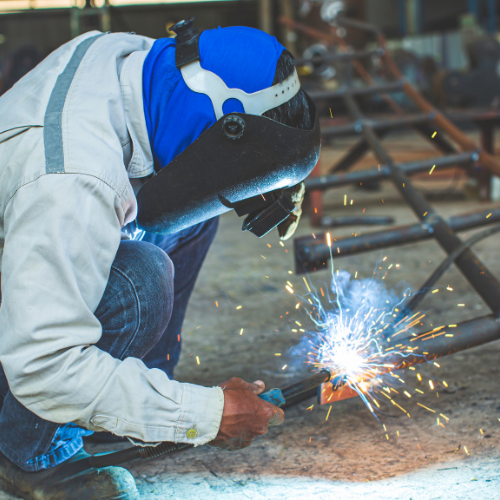
- Welders undergo practical tests to demonstrate their skills. These tests often include various welding positions and techniques, such as vertical, horizontal, and overhead welding.
- The welds are then subjected to rigorous inspections and tests, including visual inspections, radiographic (X-ray) tests, and destructive tests (e.g., bend tests) to ensure their quality and integrity.
- Certification:
- Upon passing the tests, welders receive a certification that is valid for a specific period, often requiring renewal and retesting to maintain.
- Certifications may also be specific to certain materials or welding processes, such as MIG, TIG, or Stick welding.
Importance of Coded Welding
- Safety:
- Ensures that welds in critical structures and components can withstand operational stresses and environmental conditions without failing.
- Reduces the risk of accidents and catastrophic failures in industries like construction and aerospace.
- Quality Assurance:
- Guarantees that welds meet the required specifications and standards, contributing to the overall quality of the final product.
- Helps in maintaining consistency in production, especially in mass manufacturing industries.
- Compliance:
- Many industries are subject to regulatory requirements that mandate the use of certified welders for specific tasks.
- Compliance with these regulations helps avoid legal issues and penalties.
- Professional Development:
- Achieving certification enhances a welder’s skills and knowledge, providing opportunities for career advancement.
- Certified welders are often more competitive in the job market and may command higher wages.
Applications of Coded Welding
- Construction:
- Essential for structural welding in buildings, bridges, and other infrastructure projects.
- Ensures the integrity of critical joints and connections in load-bearing structures.
- Oil and Gas:
- Used in the fabrication and maintenance of pipelines, refineries, and offshore platforms.
- Critical for preventing leaks and ensuring the safe transport of hazardous materials.
- Aerospace:
- Applied in the construction of aircraft frames, engines, and other components.
- Ensures the structural integrity of aircraft, which is vital for passenger safety.
- Automotive:
- Involved in the manufacturing of vehicle frames, exhaust systems and other parts.
- Contributes to the overall durability and safety of vehicles.
- Locomotive:
- For the construction of pressurised boilers and other parts.
- Essential for safe, operational use in steam locomotives.
Conclusion
Coded welding is a vital process that ensures the safety, quality, and reliability of welded structures and components across various industries. By adhering to stringent standards and undergoing rigorous testing, certified welders play a crucial role in maintaining the integrity of critical infrastructure and machinery. For those in the welding profession, obtaining and maintaining certification is not only a mark of skill and expertise but also a pathway to greater career opportunities and professional growth.
Need Coded Welding?
Our coded welders Jack and Marty are known for their exceptional skills and dedication to quality. With years of experience and certifications under their belts, they are integral members of the Northern Heritage Engineering team. Get in touch to discuss your requirements.
 Northern Heritage Engineering
Leave a comment